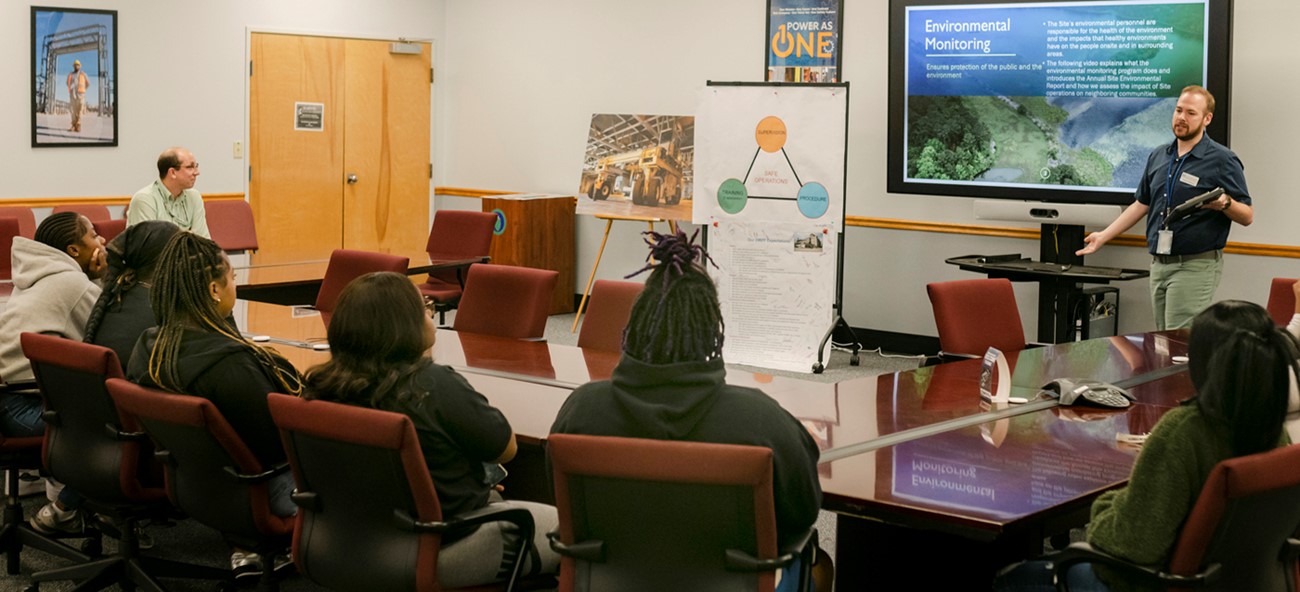
Jared Wicker of SRNS explains how different technologies are used to monitor the environment at SRS. (Photo: DOE)
Claflin University students recently toured the Department of Energy’s Savannah River Site in South Carolina to learn about the facilities and occupations there.
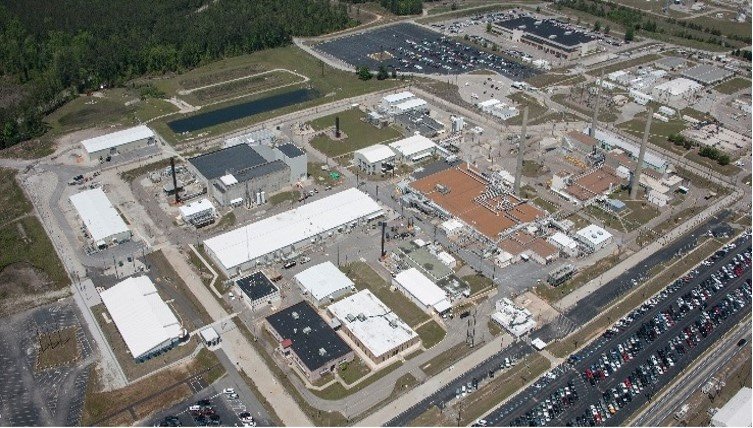
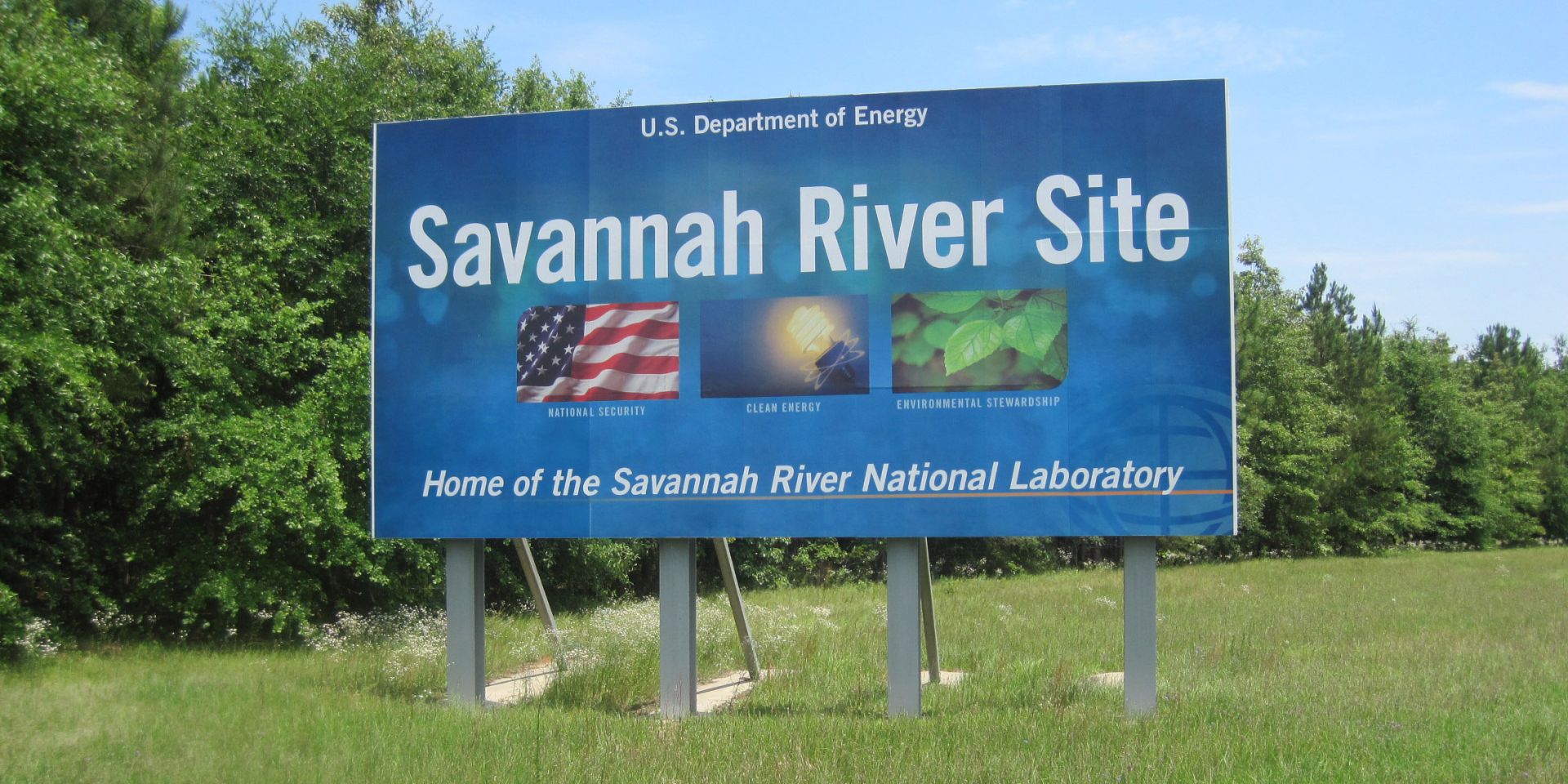
The DOE's Savannah River Site. (Photo: DOE)
The Defense Nuclear Facilities Safety Board (DNFSB) is scheduled to visit the Department of Energy’s Savannah River Site in South Carolina the week of May 8 to discuss ongoing safety concerns and the protection of the public and workforce, as well as the DOE’s effectiveness in addressing those concerns.
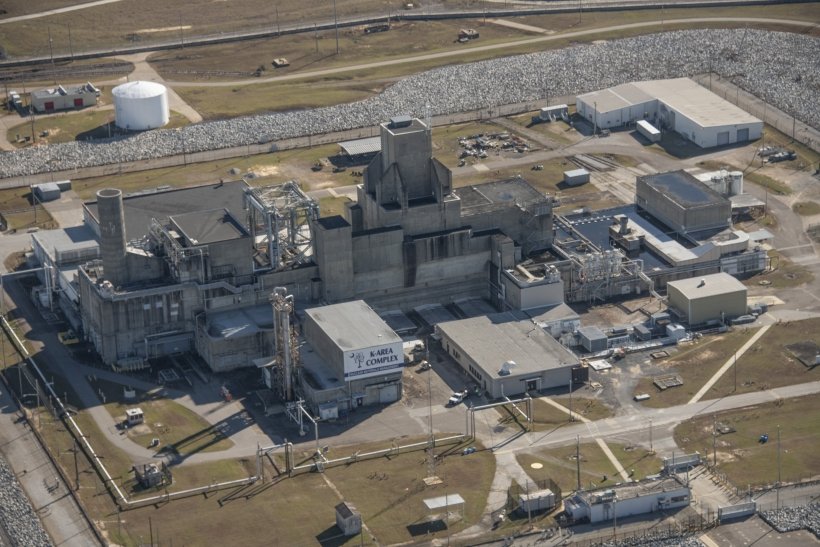
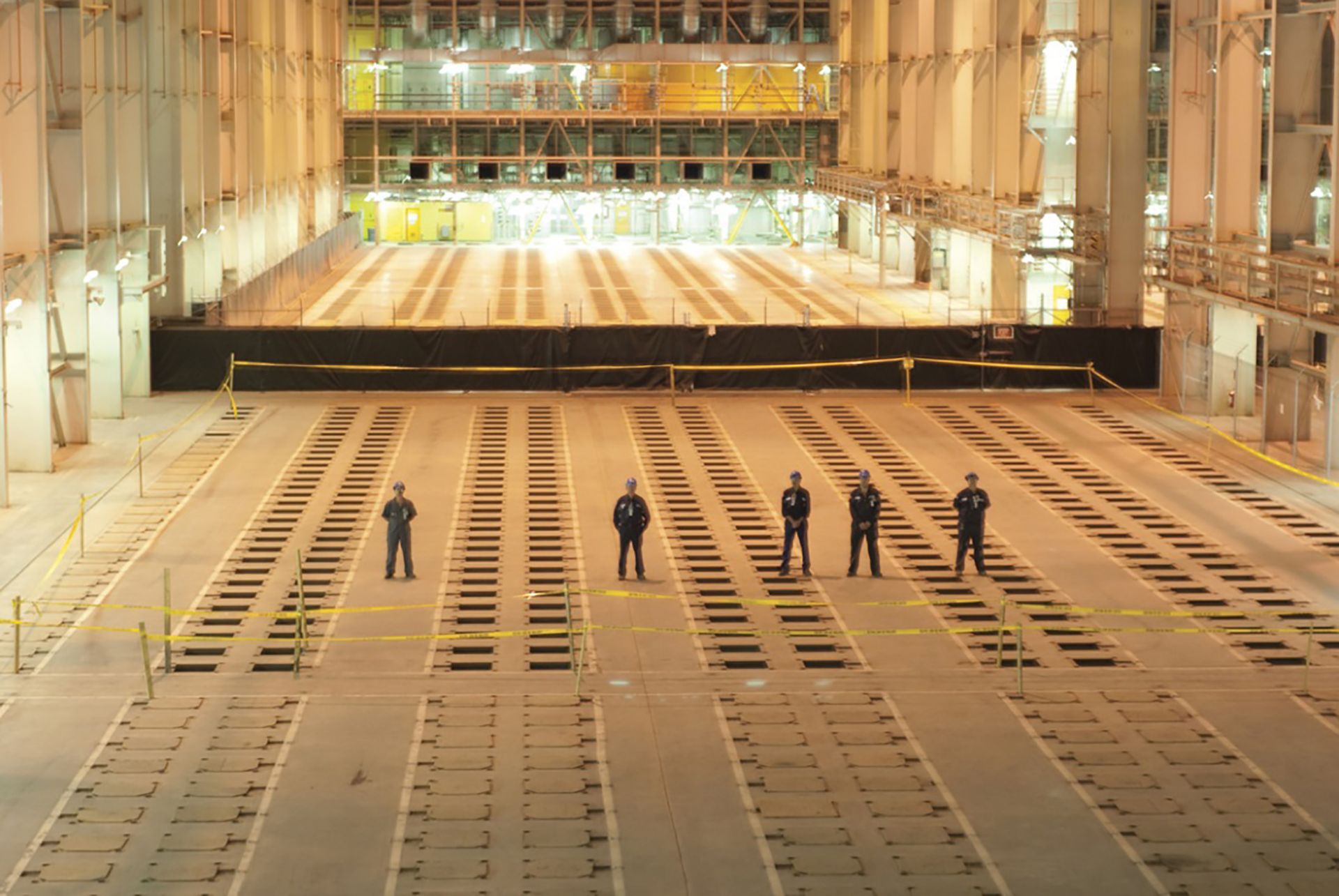
A view of Savannah River’s K Area, where employees began downblending plutonium in 2016. (Photo: DOE)
Contractor employees at the Department of Energy’s Savannah River Site in South Carolina recently exceeded their plutonium downblending goal for 2022 ahead of schedule as part of the ongoing activities to remove Pu from the state, the DOE’s Office of Environmental Management (EM) announced.
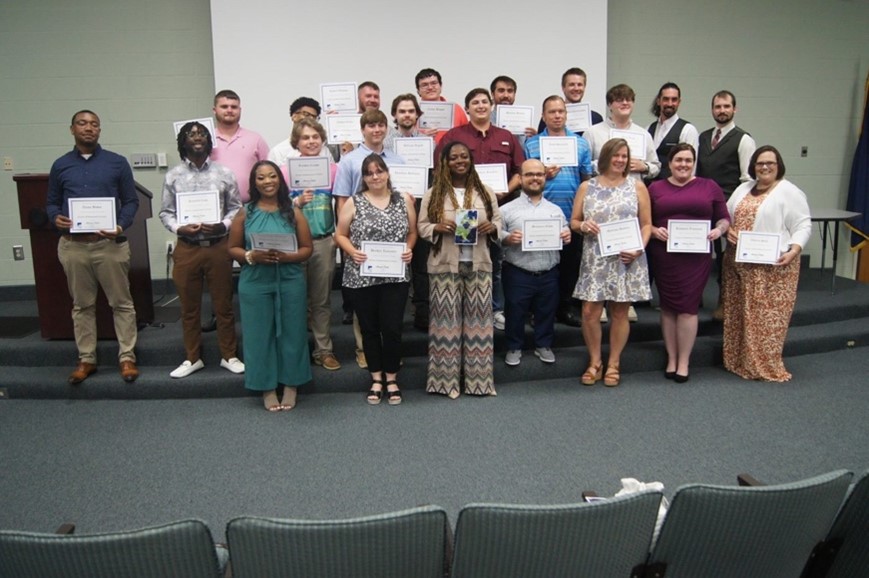
The third cohort of the Nuclear Operator Apprenticeship Program was recognized in a ceremony at Aiken Technical College. (Credit: SRNS)
Twenty-three students in the third cohort of the Savannah River Nuclear Solutions (SRNS) Nuclear Operator Apprenticeship Program graduated recently following their completion of the Nuclear Fundamentals Certificate curriculum at Aiken Technical College (ATC) in South Carolina. The class was the largest ever of operator apprentices to graduate from the program. Those graduates who meet all employment requirements are eligible for hire at the Savannah River Site.
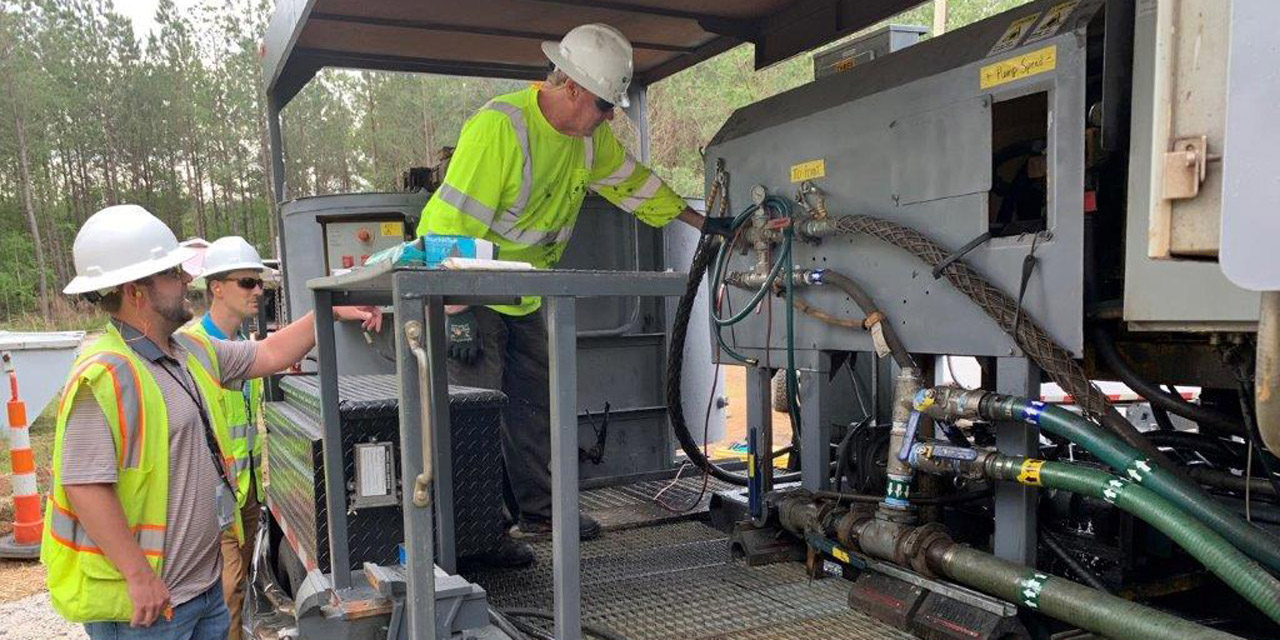
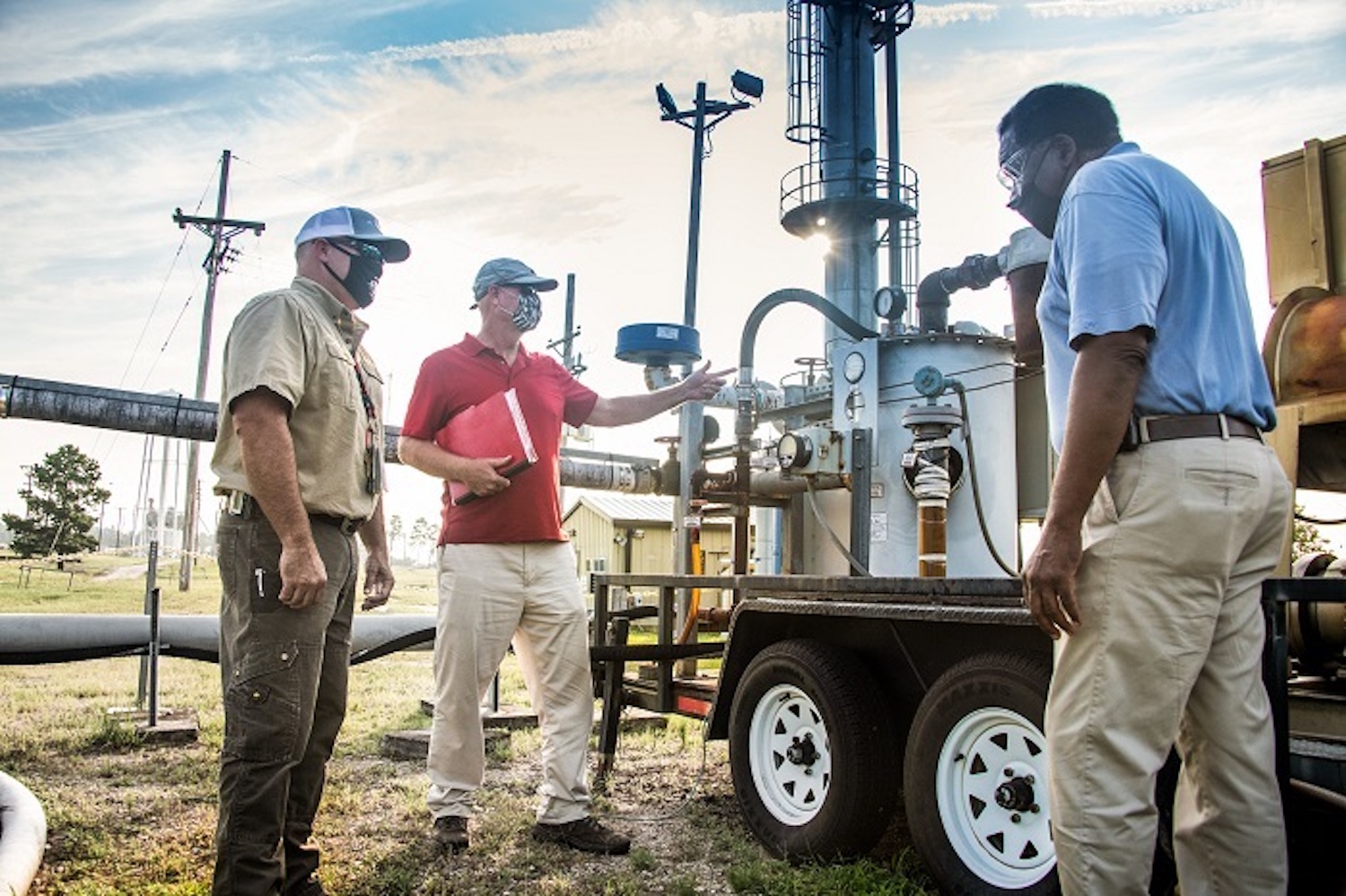
SRNS environmental engineers Bryce Garner (left) and Adam Willey (center) ask questions of lead operator Daniel Ferrell (right), from field services contractor Cascade Environmental, as he describes how equipment injects oil and iron into the Savannah River Site’s groundwater. (Photo: DOE)
In this week’s “EM Update,” the Department of Energy’s Office of Environmental Management (EM) reports that its contractor Savannah River Nuclear Solutions (SRNS) has successfully reduced degreasing solvents in the aquifer beneath the Savannah River Site in South Carolina using a technology that injects a form of iron and oil into groundwater.
“The oil attracts the Cold War[–era] cleaning solvents while the iron degrades and neutralizes the contamination,” said Shannan Lucero, SRNS manager for area closure projects.
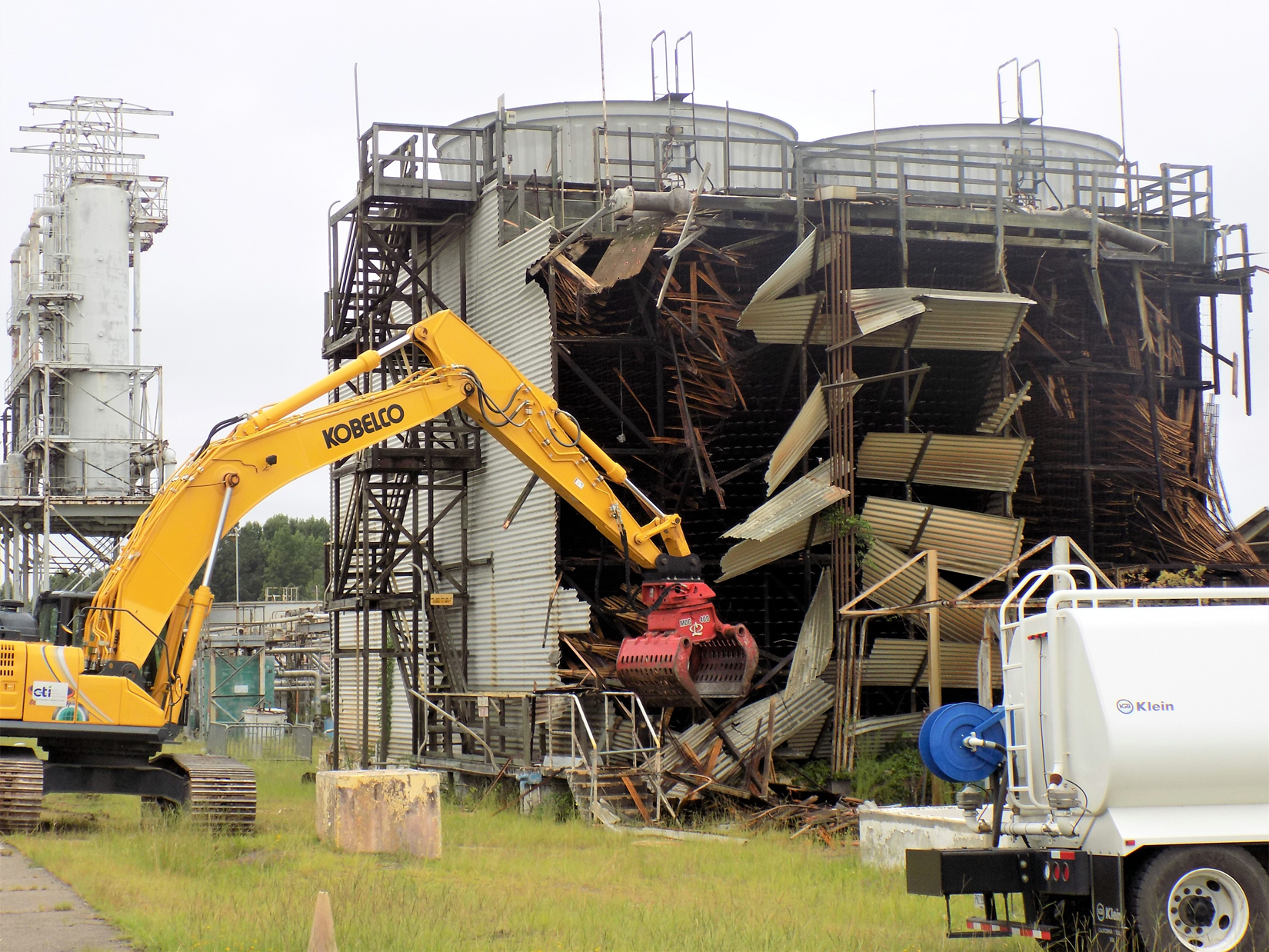
Workers demolish a large industrial cooling tower built in 1952 at the DOE’s Savannah River Site. (Photo: SRNS)
Savannah River Nuclear Solutions (SRNS), the management and operations contractor for the Department of Energy’s Savannah River Site, has torn down a large industrial cooling tower at the site’s D Area complex. The cooling tower, built in 1952, is one of more than 30 structures being removed from SRS’s D Area as the DOE works to reduce the site’s footprint.
From left, SRNS mechanic Todd Cockrell, engineer John Bradley, and project manager Joao Cardoso-Neto plan the removal of a vapor extraction unit at the Savannah River Site. (Photo: DOE)
Department of Energy site contractors Savannah River Nuclear Solutions and Savannah River Remediation received high marks from a recent independent audit of their environmental management work at the Savannah River Site in South Carolina.
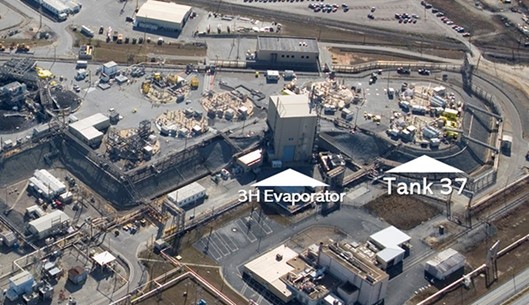
A salt dissolution campaign in Tank 37 at the Savannah River Site was completed ahead of schedule, creating tank space for evaporator operations and allowing for more feed to the Salt Waste Processing Facility. (Photo: DOE)
Department of Energy contractor Savannah River Remediation (SRR) announced on May 11 that it has completed a salt dissolution campaign in Tank 37, one of the underground tanks storing high-level radioactive liquid waste at the Savannah River Site (SRS) in South Carolina.
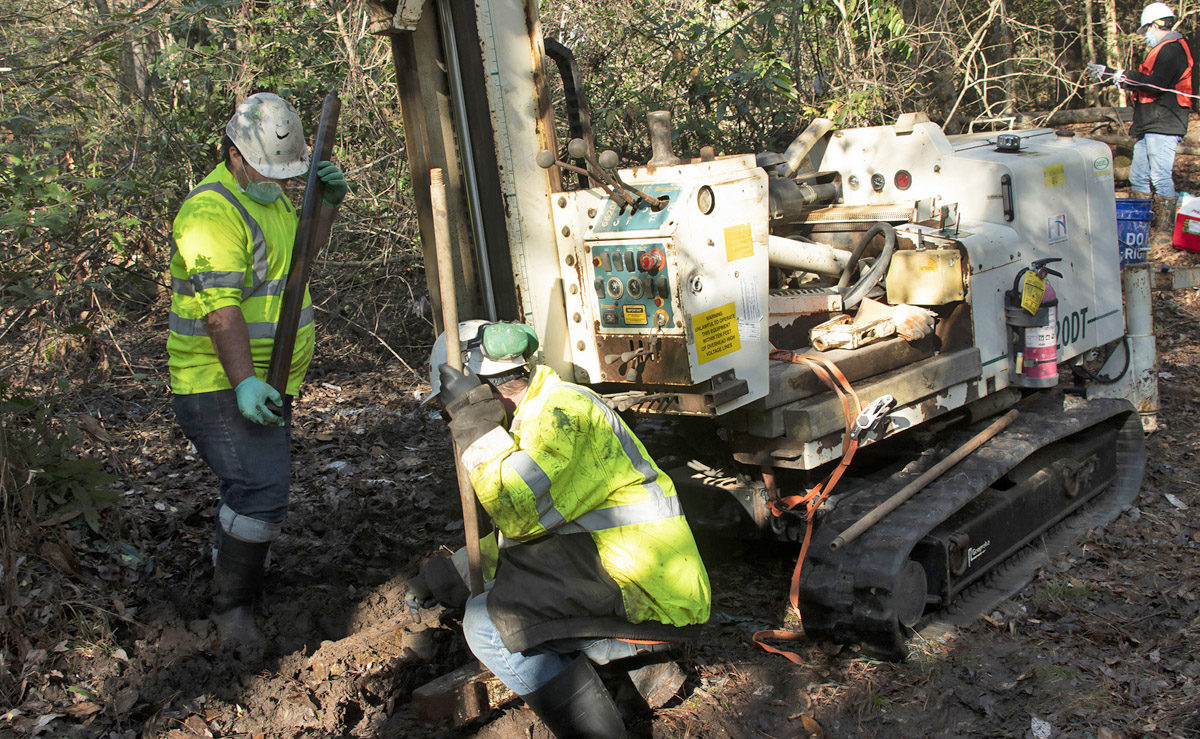
SRNS subcontractors Donald Miles and Richard Mooney drill for soil samples as part of a project to immobilize I-129 in the groundwater and soil at the Savannah River Site. Photo: DOE/SRNS
A silver chloride–based cleanup technology is expected to reduce radioactive iodine-129 contamination found in soil and groundwater near the center of the Department of Energy’s Savannah River Site in South Carolina to levels well below regulatory limits. The I-129 was created during the production of plutonium and tritium at the site throughout the Cold War era.
The interior of the process building at the American Centrifuge Plant in Piketon, Ohio, where Centrus Energy plans to operate a HALEU demonstration cascade by June 2022. (Photo: Centrus Energy)
Advanced reactor cores are being designed for higher efficiencies and longer lifetimes, but to get there, they need high-assay low-enriched uranium (HALEU).
Enriched to between 5 and 19.75 percent fissile U-235, HALEU is packed with nuclear potential. It can be used as a feedstock for the demonstration of new fuel designs, from uranium alloys to ceramic pellets and liquid fuels. Those fuels can enable advanced reactor and microreactor demonstrations. Operating light-water reactors could potentially transition to HALEU uranium oxide fuels for extended operating cycles and improved plant economics.

 Citizens for Nuclear Technology Awareness